Inside this article
In the TACO Index you propose, above 70, we're not simply looking at excess, but rather a range where the market is starting to bet on political intervention, a White House slowdown, or a technical reaction from the lows. Between 60 and 70, there's pressure; below 60, calm prevails. Interpreted this way, it's not a peak indicator but a potential reversal, consistent with the so-called TACO trade, a term used to describe the tendency of traders to price in a Trump retreat when market pressure becomes too great.
The point is that the latest news has perfectly re-enacted this dynamic. On March 26, Trump announced a 10-day suspension of attacks on Iranian energy facilities, until Monday, April 6, 2026, at 8:00 PM ET, claiming that talks are going "very well." At the same time, however, Iran has called the American proposal "one-sided and unfair," while on the ground the conflict has continued to affect shipping, military bases, and energy flows in the region. Today, March 28, Reuters also reports that the conflict has entered its fifth week, the Houthis have expanded the front with the first launches against Israel, and Washington has strengthened its military presence to maintain operational flexibility.
Iranian conditions also confirm that the so-called "openings" must be interpreted with extreme caution. According to a Press TV report reprinted by the Wall Street Journal, Tehran is demanding a complete halt to attacks, guarantees that war will not be rekindled, reparations, an end to hostilities on all regional fronts, and recognition of its authority over the Strait of Hormuz. In parallel, the G7 has called for the immediate and permanent reopening of the strait. In other words, diplomatic signals are there, but we are still far from true geopolitical normalization.
The market's reaction was brutal and clear, especially in oil. On March 23, following the first postponement of the US strikes, crude oil fell by approximately 11%: Brent to $99.94 and WTI to $88.13, after an intraday plunge of nearly 15%, before recovering some of its losses when Iran denied genuine negotiations and the attacks resumed. It was the perfect snapshot of TACO: as soon as the market sensed de-escalation, it unloaded its war prize.
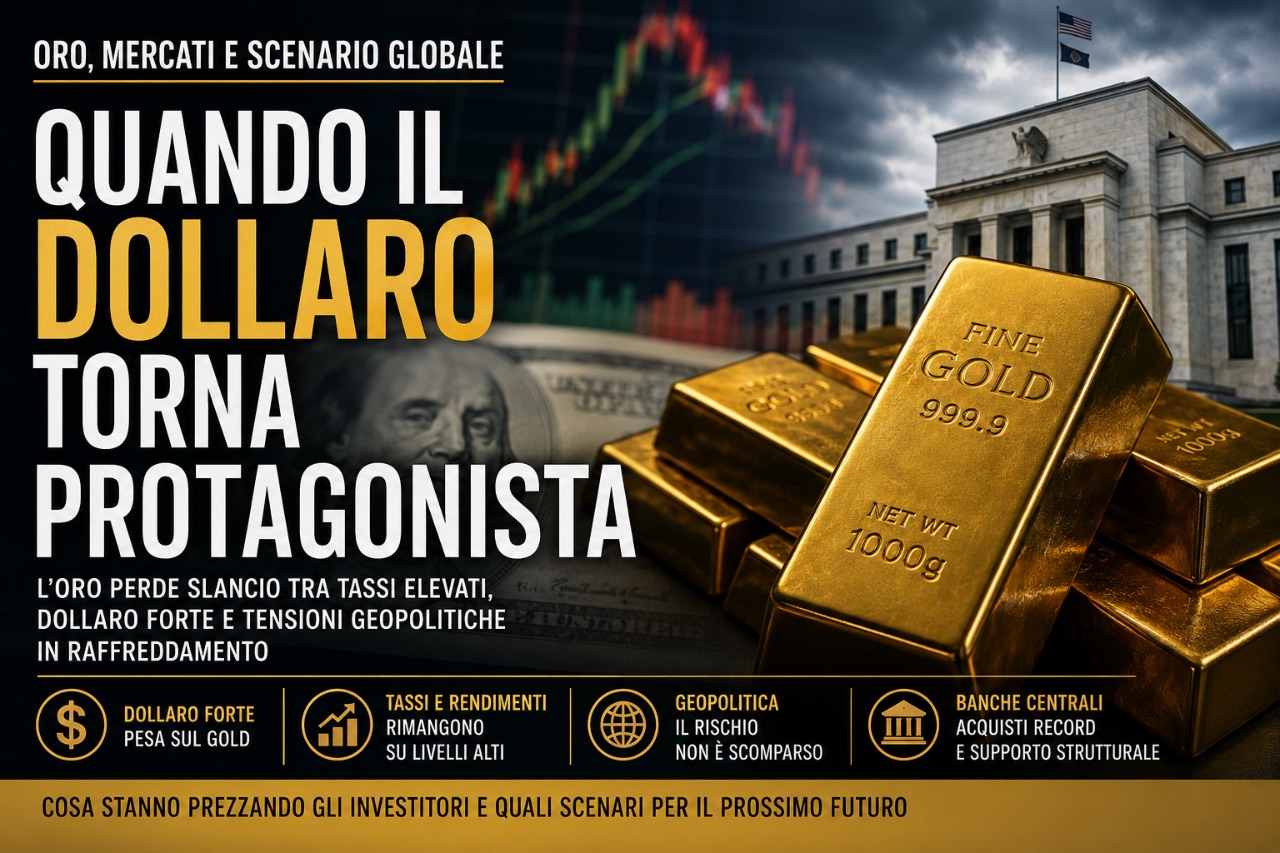
Gold, theoretically a safe haven, did the opposite of the classic scenario in that same window: on March 23, it fell 1.8% to $4,407, after having lost over 8% intraday. This tells us something important: in this phase, gold is not only reacting to geopolitical risk, but also to the financial crunch that the market is starting to price in, amid a stronger dollar and fears of higher interest rates. As soon as Trump hinted at talks, the market saw less need for immediate hedging and more risk of persistent inflation via energy.
Then came the second, more interesting, reading. Once the market realized that the openings weren't enough to truly reopen Hormuz or remove the risk of escalation, oil began to rise again. Reuters reports that Brent crude has risen more than 50% since the start of the war, briefly surpassing $119, and, according to scenarios developed by a Reuters poll, could rise to $200 if Kharg Island, the hub of approximately 90% of Iranian oil exports, were to be hit. Trump is also reportedly considering the option of using ground forces on Kharg Island, a detail that alone is enough to maintain a strong risk premium.
Gold, on the other hand, gave a dirtier but perhaps even more valuable signal. On March 26, it fell again by 2.7%, penalized by the dollar and rising oil prices; On March 27, however, it rebounded by more than 3%, returning to the $4,492 area, as traders continued to monitor the Middle East and buy the dip after the shakeout. In essence, XAU first priced in rate relief and repricing, then began to recover as the market realized that geopolitical risk and inflation damage were far from gone.
This is where the market's real message comes in. Oil today isn't pricing in peace; it's pricing in physical logistics. As long as Hormuz remains the central hub, every diplomatic headline triggers an initial sell-off, but if ships, insurance, flows, and threats remain compromised, buyers return. Reuters summed it up well: the crude oil market continues to partially price in a relatively rapid reopening of the Strait, but this very hope for a "TACO" paradoxically risks reducing the political urgency of a true de-escalation.
Gold, on the other hand, is starting to give clues to what the market fears beyond the war itself. My reading is this: XAU isn't necessarily waiting for the formal end of the conflict to restart. It's trying to understand whether the greatest damage will be immediate and military, or later and macroeconomic: energy inflation, more stringent central banks, a crisis of confidence in diplomatic narratives, and the risk of stagflation. If the market concludes that inflation and political uncertainty will outlast the ceasefire, then gold may begin to build a low before the war ends, not afterward. This is an inference, but it's consistent with the fact that the March 27 rebound occurred while the conflict was still raging and interest rate concerns remained elevated.
The International Energy Agency's new report, "Sheltering From Oil Shocks," published on March 20, 2026, also weighs heavily in this context. The IEA went beyond simply commenting on prices: it presented 10 emergency demand-side measures to rapidly reduce oil consumption and mitigate the impact on the cost of living, from remote working to reducing speed limits, from strengthening public transport to car sharing, from cutting non-essential flights to improving logistics and industrial efficiency. The very fact that the agency has made these types of recommendations speaks to the extent to which the shock is considered serious and not merely speculative.
In short, the TACO Index is useful today precisely because it doesn't seek the top: it seeks the point where market pressure and political pressure begin to converge. Above certain thresholds, the market isn't saying "it's over," but rather "someone might be forced to intervene here." For now, however, oil is telling us that the war is far from over, because the heart of the problem remains Hormuz. Gold is telling us something more subtle: the war may end with a stock, but its effects on inflation, rates, and confidence could last much longer. And that's precisely where the market is already starting to look.
Related articles
Share article
Disciply
Want to take trading seriously?
Reduce improvisation and impulsive mistakes with checklists, entry reasons, and trade reviews.
Turn every trade into a clear, consistent, measurable process.
Process before outcome.
Start with Disciply
Comments
Latest comments
All comments