Inside this article
Last updates
In recent sessions the gold market has shown high volatility. After a technical recovery recorded in mid-June, the precious metal returned under pressure following the indications of the Federal Reserve, which kept the rates unchanged but left the door open to further narrow coins during the year.
The market reaction was immediate: the dollar strengthened and bond yields found support, reducing the attractiveness of an asset that does not generate coupons like gold. According to Reuters, the metal closed the third consecutive week down, signal that the market is reassessing the path of US monetary policy.
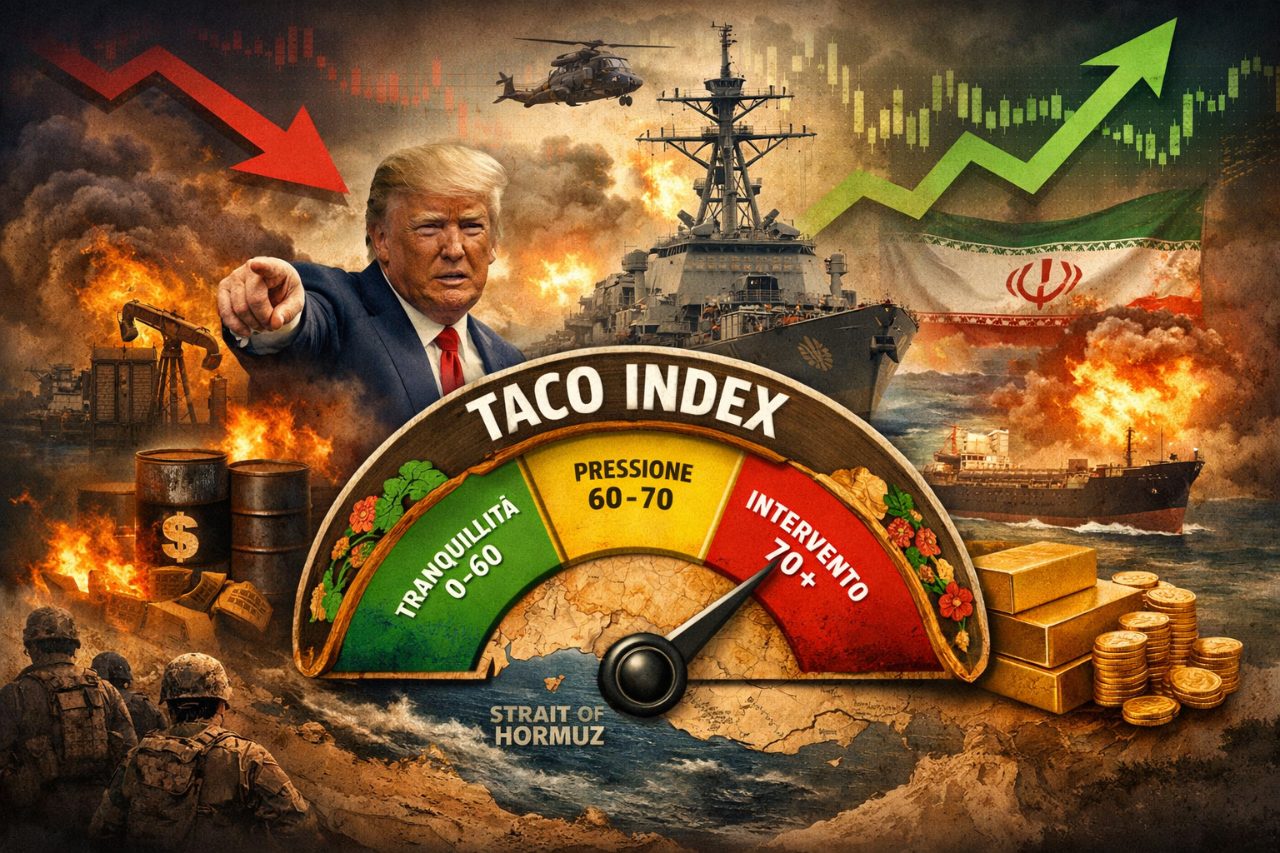
At the same time, some diplomatic developments in the Middle East have helped temporarily reduce the demand for shelter goods, reducing one of the main sources of support that had fueled the rally of the previous months.
/Context
To understand the current phase it is necessary to remember that gold comes from an extraordinaryly strong cycle.
Between 2024 and early 2026, yellow metal benefited from a combination of favorable factors:
- record purchases of central banks;
- increasing geopolitical fragmentation;
- fears about the sustainability of global debt;
- search for protection against inflation and financial instability.
During the first quarter of 2026 the price had reached new historical ceilings, mainly supported by institutional demand and the reduction of exposure to the dollar in some emerging economies. However, the subsequent rise in expectations on US rates triggered a significant corrective phase.
Today the market is faced with a crucial question: is correction a break within a structural trend or the beginning of a longer phase of consolidation?
Current development
At present the behaviour of gold reflects a confrontation between two opposing forces.
On the one hand there are favourable elements:
- purchases of central banks;
- high global public debt;
- geopolitical tensions still present;
- demand for diversification by institutional investors.
On the other hand they are weighing:
- relatively strong dollar;
- higher rates expectations longer;
- real returns still supported;
- less urgent geopolitical coverage than the peaks observed in recent months.
The result is a market that alternates technical rebounds and profits, without being able to build a dominant direction.
In this phase, the movement appears mainly driven by macroeconomics and monetary policy rather than purely technical factors.
Strategic analysis
The real gold engine remains the relationship between real rates, dollar and economic expectations.
When markets believe that the Federal Reserve can cut rates, gold tends to benefit from:
- lower real yields;
- lower alternative performance of the Treasury;
- weaker dollar.
On the contrary, when the likelihood of high rates or higher rises, gold loses competitiveness compared to bond instruments. This is exactly what is happening in the last few weeks.
However, there is a second component which continues to support the structural framework: the purchases of central banks.
Several monetary institutions continue to increase the gold reserves as a form of diversification with respect to the reserves denominated in dollars. This question does not necessarily follow short-term speculative logic and represents one of the pillars of the market in recent years.
Moreover, the economic slowdown observed in some areas of the world keeps open the possibility that in the next quarters the central banks are forced to a less restrictive policy, which the gold market continues to monitor closely.
Impact on the financial market
Gold remains one of the most sensitive assets to changes in the global macro-financial context.
On the currency front, the strengthening of the dollar is representing a significant obstacle for further recovery of the metal.
On the bond front, high returns continue to offer a credible alternative to conservative investors, limiting flows to the aurifer sector.
With regard to actions, gold behavior suggests a less panic-oriented feeling than other recent moments. We are not faced with a classic race towards the refuge, but rather a phase of reassessment of monetary expectations.
Oil is also playing an important role. The cooling of energy tensions has helped to reduce short-term inflationary expectations, decreasing one of the main bullish arguments for gold.
Motion structure
The quality of the current movement appears mixed.
There are no signs of panic or general escape from the gold market. However, there is no such force as to justify an immediate resumption of historical maximums.
- The recent downturn appears mainly tied to rates and the dollar.
- Structural demand for central banks continues to provide support.
- Geopolitical tensions have not disappeared but have lost part of the immediate impact.
- The market is looking for confirmations on the future direction of the Federal Reserve.
In other words, the current picture suggests consolidation rather than definitive reverse of the long-term trend.
Possible scenarios
Positive scenario
Gold could come back to strengthen itself if:
- inflation showed signs of cooling;
- Fed abandoned the hypothesis of new uprisings;
- the dollar began to weaken;
- new geopolitical tensions fed refuge demand.
In this context, institutional flows could return to support the market with greater conviction.
Negative scenario
The ribassist scenario includes:
- still high inflation;
- additional restrictive signals from Fed;
- Real yields increasing;
- strengthening of the dollar.
In this situation, the market could continue to reduce the exposure to precious metal and promote asset yield.
More realistic scenario
In light of the information currently available, the most likely scenario seems to be a consolidation phase.
The market is divided between structurally gold-friendly factors and a relatively restrictive monetary policy. This balance could result in side movements and high volatility until the arrival of new macroeconomic data that can change expectations on rates.
Real risks to monitor
The main risk factors for the gold market remain:
- further increase in real yields;
- persistent strengthening of the dollar;
- review of expectations on US rates;
- reduction of refuge demand in case of geopolitical improvement;
- profits after the strong gains accumulated in recent years;
- more solid economic data than expected to reduce the likelihood of a monetary loosening.
Conclusion
The message that comes today from the gold market is more nurtured than that observed during the moments of maximum geopolitical tension.
Operators are not abandoning the precious metal, but are reassessing the premium to be attributed to protection in a context where the Federal Reserve continues to maintain a cautious posture and the dollar retains relative strength.
The real variable to monitor in the coming weeks will be the evolution of expectations on US rates. If the market begins to believe that the restrictive cycle is near the conclusion, gold may find momentum. If the higher rate scenario prevails longer, the consolidation phase may extend further.
Key points
- The strong dollar and high rates remain the main obstacle for gold.
- Central banks continue to represent structural support for demand.
- The market is reacting more to monetary policy than geopolitical.
- Real returns remain the factor to be monitored more carefully.
- The most probable scenario in the short term is a phase of high volatility consolidation.
Related articles


Share article
Disciply
Want to take trading seriously?
Reduce improvisation and impulsive mistakes with checklists, entry reasons, and trade reviews.
Turn every trade into a clear, consistent, measurable process.
Process before outcome.
Start with Disciply
Comments
Latest comments
All comments