Inside this article
Introduction
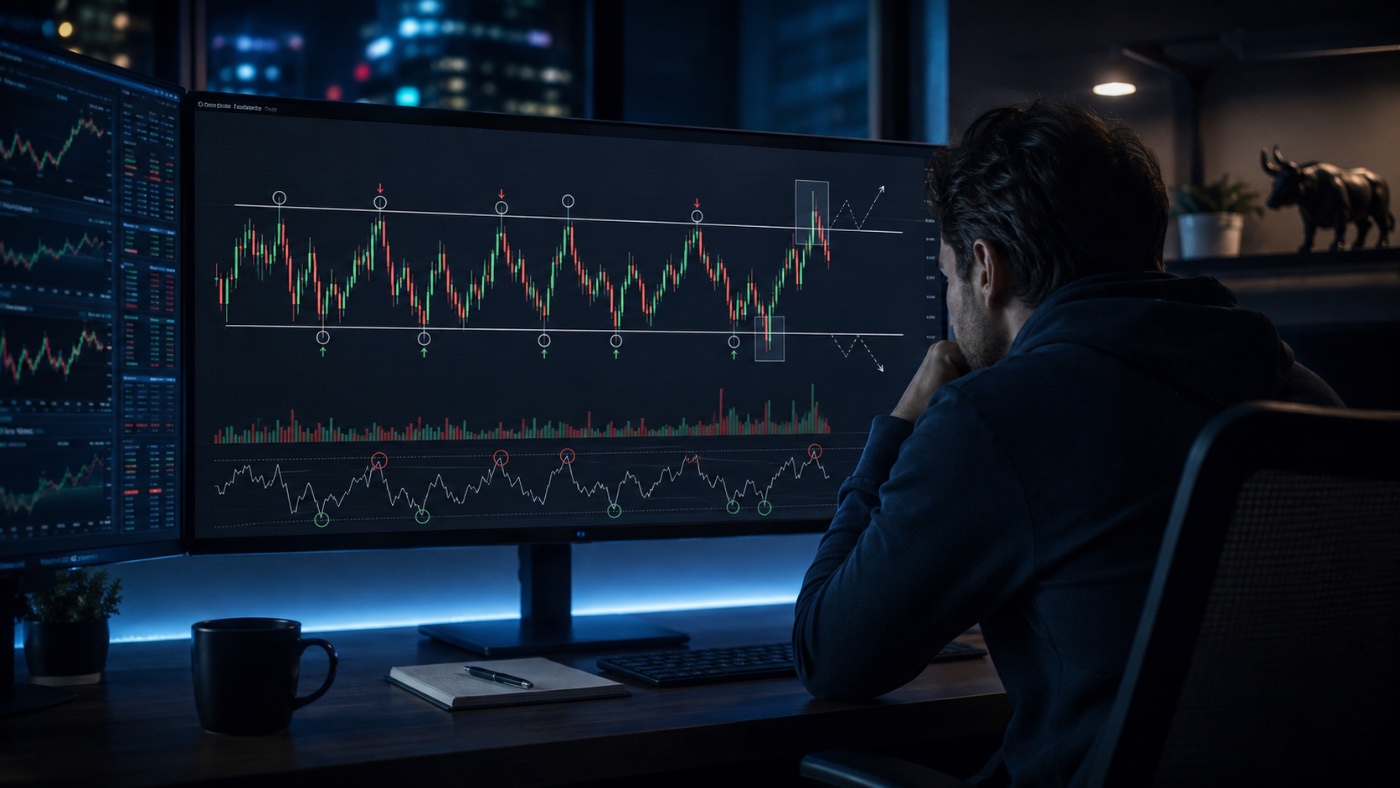
Waiting for a setup trading means accepting that some sessions do not offer enough conditions to open a position.
The market can be slow, side or simply unreadable. It is precisely in these moments that a common mistake arises: bored → need to do something → lower criteria → mediocre trade.
Don't do anything is not like having a plan. If conditions do not exist, the “no trade” can be the most consistent decision with the plan.
The real problem
Many traders measure a session only through operations carried out.
Spend two hours in front of the charts without entering is perceived as lost time. As a result, a setup that at first would have been discarded gradually becomes “good enough”.
The market has not changed. The availability of the trader has changed to wait.
Because it happens
Waiting creates discomfort because it does not produce immediate feedback.
When the price remains shockppy, the trader continues to observe small fluctuations until it begins to attach importance to movements that would normally ignore.
It is not necessarily FOMO in trading: in the FOMO themes that the movement starts without you. Here often the important movement does not exist yet. It is precisely the absence of opportunity to become difficult to tolerate.
The most common errors
The first mistake is to reduce the required confirmations.
The second is to continuously change timeframes, market or direction as long as something looks like an entrance.
Another signal is to start thinking: “I am small, so much to try”.
The reduced size does not automatically transform a trade without setup into a good decision.
What to do in practice
Define before the session the minimum conditions that must be present.
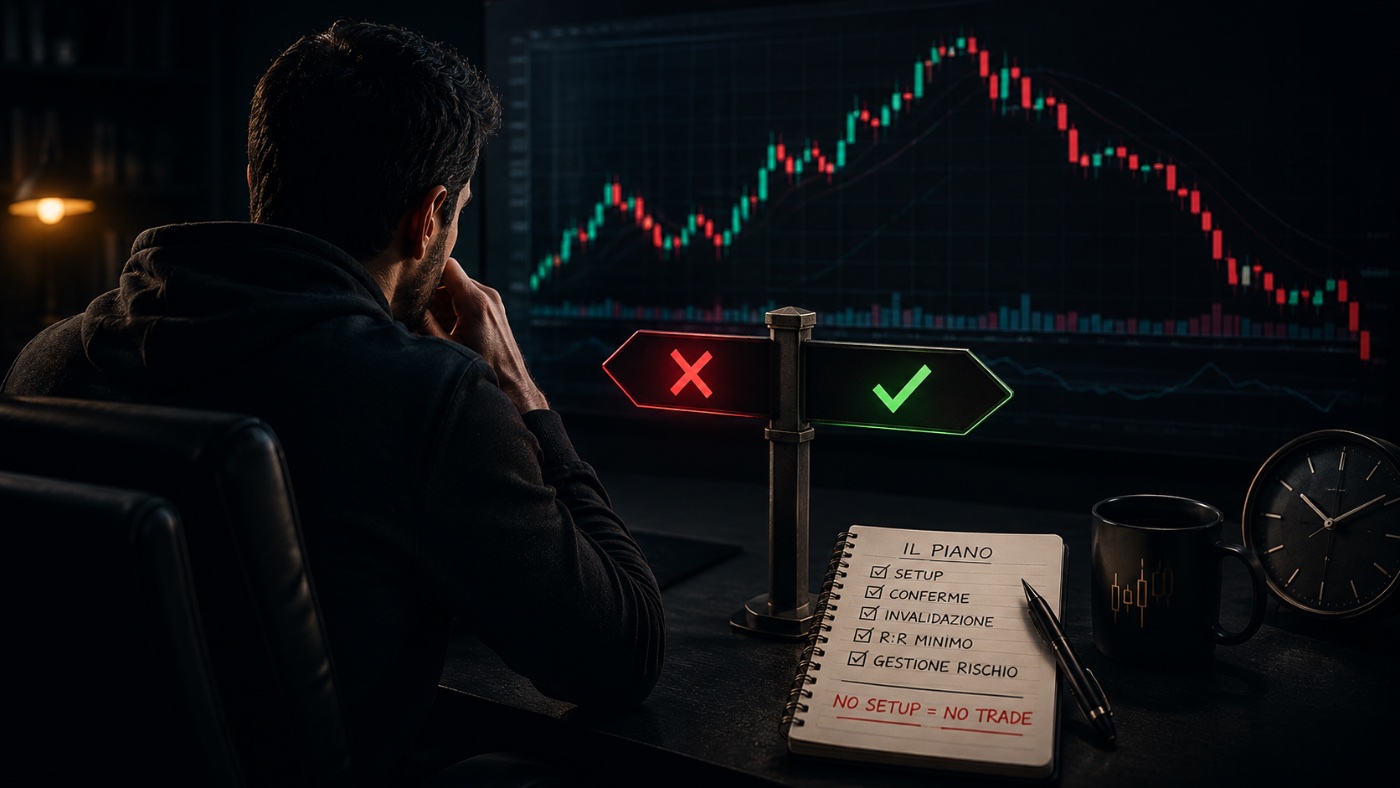
A checklist before entry can establish context, structure, confirmation, disability and risk.
Then add an equally important rule: if conditions are not reached, the session can end without trade.
The “no trade” must be expected before, not only when you are already frustrated.
Example concrete
Trader A normally requires three conditions to enter.
After 90 minutes of lateral market only finds two, but decides that they are sufficient. It opens a mediocre trade. Soon after you force a second because you want to recover the first.
Trader B uses the same criteria. No setup reaches three conditions and closes the session without operations.
At the end of the day Trader A has two trades to analyze. Trader B has an equally important decision to record: he waited and respected the plan.
How a trading journal can help
A journal should not only record what you did.
You can also note sessions without trades, settings observed but discarded, missing conditions, time spent on the market and moments when you felt the need to enter without sufficient reason.
The conferme trading become so measurable even when they lead to the decision not to operate.
Over time you can compare forced trades with the sessions you've been waiting for.
Where does Disciply
Disciply can connect Journal, Next Trade Plan, Discipline Score and Session Intelligence to evaluate not only the operations performed, but also compliance with the conditions necessary to execute them.
If the plan required a certain setup and that setup did not appear, staying out can become a measurable part of the discipline.
The value is not in rewarding inactivity. It is in distinguishing operational patience and simple absence of decision.
FAQ
**A day without trade is a wasted day?
No. If no setup meets the plan, zero operations can be a correct execution.
**Wait means looking for the perfect setup?
No. It means waiting for the minimum conditions provided by your method, not for certainty.
**Is it the same as overtrading? *
Not exactly. Overtrading mainly covers excess operations. Here the problem arises first: do not manage to wait for a valid setup.
Conclusion
Waiting for a setup trading is a concrete part of the execution.
The market is not obliged to offer you an opportunity whenever you open the platform. If you continually lower the criteria to enter, you are not finding more setup: you are changing the method to meet the need to operate.
The disciplinary in trading also includes the ability to finish a session without pressing BUY or SELL.
Key points
- An open market does not imply a trade.
- The boredom can gradually lower the setup criteria.
- The “no trade” can be a planned and measurable decision.
- Changing market or timeframe can be a way to force opportunities.
- The journal should record even when you respected the plan by staying out.
/ Final CTA
In the next session, don't just ask which trade you can open. Check first if the market has actually given you the necessary conditions to open one.
Related articles

Share article
Disciply
Want to take trading seriously?
Reduce improvisation and impulsive mistakes with checklists, entry reasons, and trade reviews.
Turn every trade into a clear, consistent, measurable process.
Process before outcome.
Start with Disciply
Comments
Latest comments
All comments